AI writing SaaS
ResearcherAI
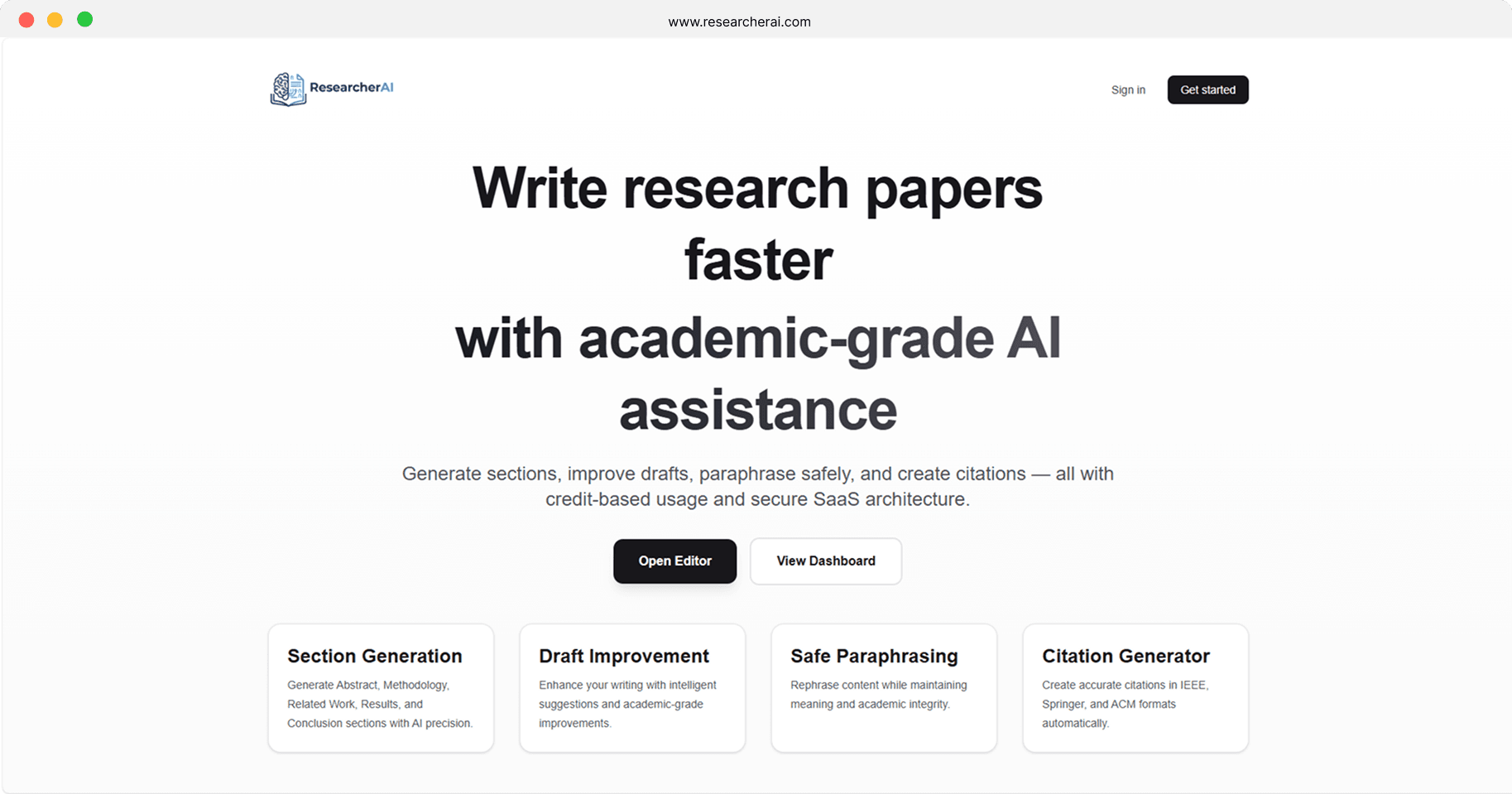
ResearcherAI is a complete SaaS product for academic writing: user accounts, a research paper editor, AI writing tools powered by Google Gemini, document upload, credit-based billing and online payments. It covers the full set of pieces a paid SaaS needs, not just the AI feature.
- Role
- Full-stack development
- Status
- Deployed as a working SaaS with payments enabled.
- Links
- Visit live site
The problem
Writing a research paper means structuring sections, keeping an academic tone, formatting citations correctly and rewording text without changing its meaning. General-purpose chat tools do not understand paper structure or citation formats, and they give users no way to keep their work organised by paper and section.
Approach
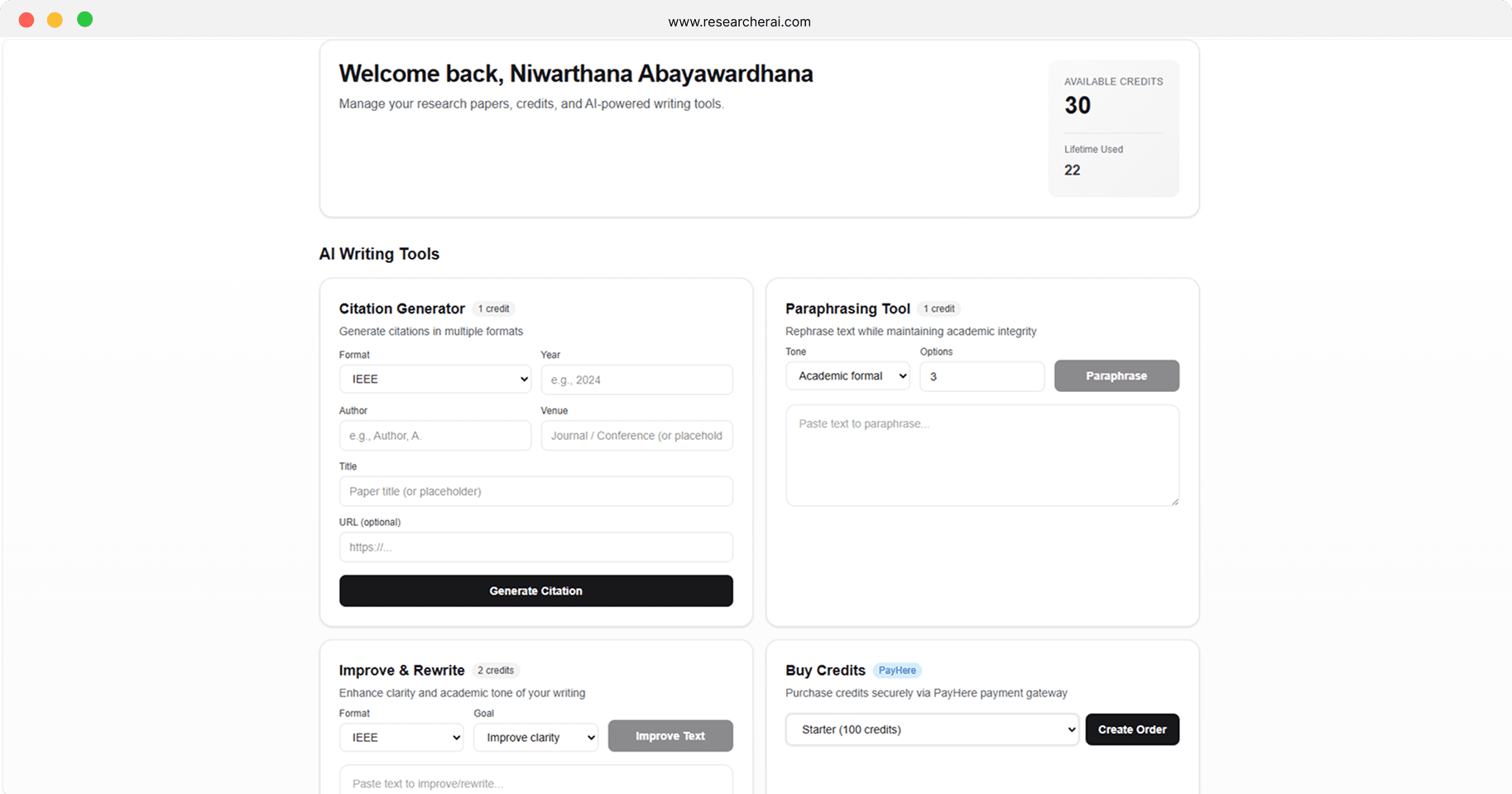
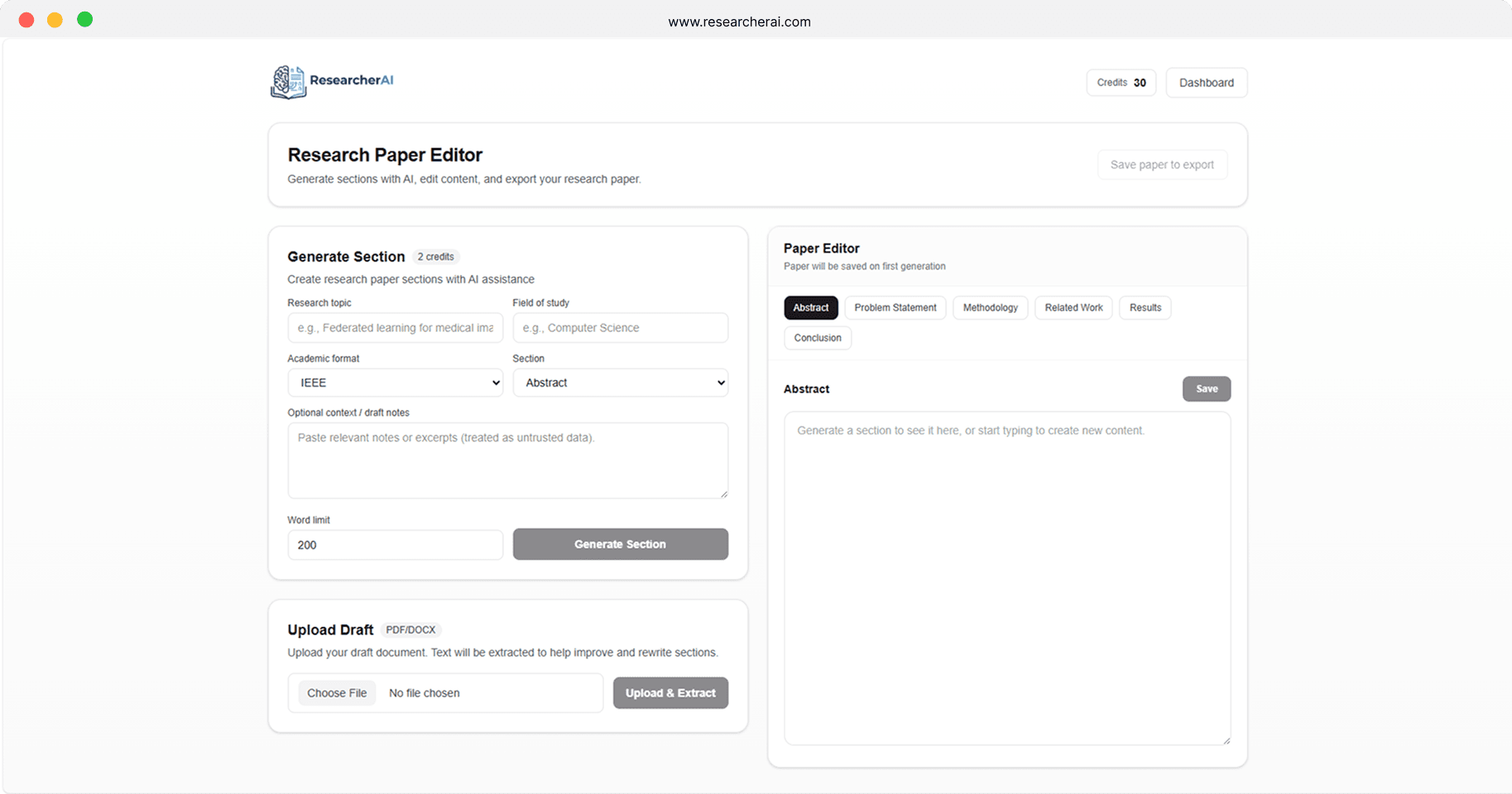
I built the product around a section-based paper editor, so AI output lands in a specific part of a specific paper. Each AI tool — section generation, improve and rewrite, paraphrasing, citation generation — costs a set number of credits, which keeps usage predictable for users and model costs controlled for the product.
What I built
- Section generator for abstract, problem statement, methodology, related work, results and conclusion
- Improve and rewrite tool with selectable academic format and goal
- Paraphrasing tool with tone options
- Citation generator for IEEE, Springer and ACM formats
- PDF and DOCX draft upload with text extraction
- Credit balance, usage history and credit purchases through PayHere
Architecture
Next.js 14 App Router with React Server Components and TypeScript. PostgreSQL with Prisma ORM for users, papers, sections and credit transactions. Google Gemini for generation, AWS S3 for uploaded documents, and the PayHere payment gateway for credit purchases. Serverless API routes validate input and apply rate limits before any model call.
Key decisions
Credits instead of a flat subscription
AI generation has a real per-request cost. Pricing each tool in credits ties what users pay to what they use, and makes heavier operations like section generation cost more than a single citation.
Validation and rate limiting before the model
Every AI route validates input and enforces limits first, which protects both the credit balance and the model budget from malformed or abusive requests.
Uploaded drafts treated as untrusted data
Text extracted from uploaded PDFs and DOCX files is passed to the model as context, not as instructions, which reduces the risk of uploaded content steering the output.
Screens